UTAH - 801.406.8670


When Do Wisdom Teeth Come In
Key Takeaways
Who It’s For
|
Wisdom teeth usually come in between ages 17 and 25. You might feel them as early as 16 or as late as your mid-twenties, and some people never develop them at all. The exact timing varies from person to person based on genetics, jaw size, and how your other permanent teeth have settled in.
If you’re feeling a dull ache or pressure at the back of your mouth, your wisdom teeth may be starting to push through. That pressure is normal. The question is whether your mouth has enough room for them and whether they’re growing straight.
Signs Your Wisdom Teeth Are Coming In
Eruption doesn’t happen overnight. Wisdom teeth begin forming in the jawbone years before they break through the gum tissue, and the signs tend to show up gradually.
Here’s what most people notice first:
- Pressure or a dull ache in the back of the mouth, behind your second molars
- Tender or bleeding gums at the very back of your jaw
- Jaw stiffness or soreness, especially when chewing
- Swelling in the gum tissue where the tooth is trying to push through
- Persistent bad breath or an unpleasant taste caused by food particles getting trapped around a partially erupted tooth
Some of these symptoms come and go. A wisdom tooth might push through in stages, causing discomfort for a few days before settling down and flaring up again weeks later. The pain doesn’t always stay in one spot, either. Pressure from an emerging wisdom tooth can radiate to nearby teeth, your jaw, and even your ear.
If the discomfort is manageable and temporary, it may just be normal eruption. If you’re dealing with severe pain, difficulty swallowing, swollen lymph nodes, or a bad smell from the area, that’s a sign something more is going on, and you need to see a dental professional.
How Impacted Wisdom Teeth Affect Adjacent Teeth and Overall Oral Health
When there isn’t enough room in the jaw for a wisdom tooth to erupt fully, it becomes impacted. Impacted teeth may be stuck beneath the gum tissue, trapped in the jawbone, or growing at an angle toward neighboring teeth. About 90% of people have at least one impacted wisdom tooth, according to the American Association of Oral and Maxillofacial Surgeons.
The problem with impacted wisdom teeth goes beyond the tooth itself. A partially erupted wisdom tooth creates a pocket between the tooth and the gum where food particles and bacteria collect. Normal brushing can’t reach these areas, which means your oral hygiene routine won’t be enough to keep the area clean. Over time, this leads to infection, tooth decay in the adjacent teeth, and gum disease that can spread to the rest of your mouth.
Impacted teeth can also push against other teeth in the oral cavity, shifting alignment. If you’ve already had orthodontic treatment or orthodontic work to straighten your teeth, a wisdom tooth growing sideways into your second molars can undo that progress.
A wisdom tooth that isn’t causing pain right now isn’t necessarily harmless. The damage to your overall oral health often happens slowly, below the gum line, where you can’t see or feel it until a dental X-ray reveals the problem.
When Wisdom Teeth Need to Be Removed
If your third molars come in straight, have enough space, aren’t pressing against nearby teeth, and you can keep them clean, they may not cause problems. Your dentist will monitor them at regular dental visits to make sure that stays true.
Most wisdom teeth, though, do need to be removed. The most common reasons include impacted teeth that are partially erupted or growing at an angle, recurring infection in the gum tissue around the tooth, damage or pressure on adjacent teeth, cysts forming around the impacted tooth, and tooth decay in a wisdom tooth that’s difficult to clean.
The best time to get your wisdom teeth removed is during the 17 to 25 window, when the roots aren’t fully formed yet. Extraction is more straightforward in young adults because the bone around the tooth is less dense and the roots haven’t had time to wrap around nerves or anchor deeply.
A wisdom tooth that hasn’t erupted yet can still be developing problems under the surface. Regular dental check-ups and X-rays are the only reliable way to track what’s happening below the gum line and to prevent complications before they escalate.
What Dental X-Rays Reveal About the Eruption Process
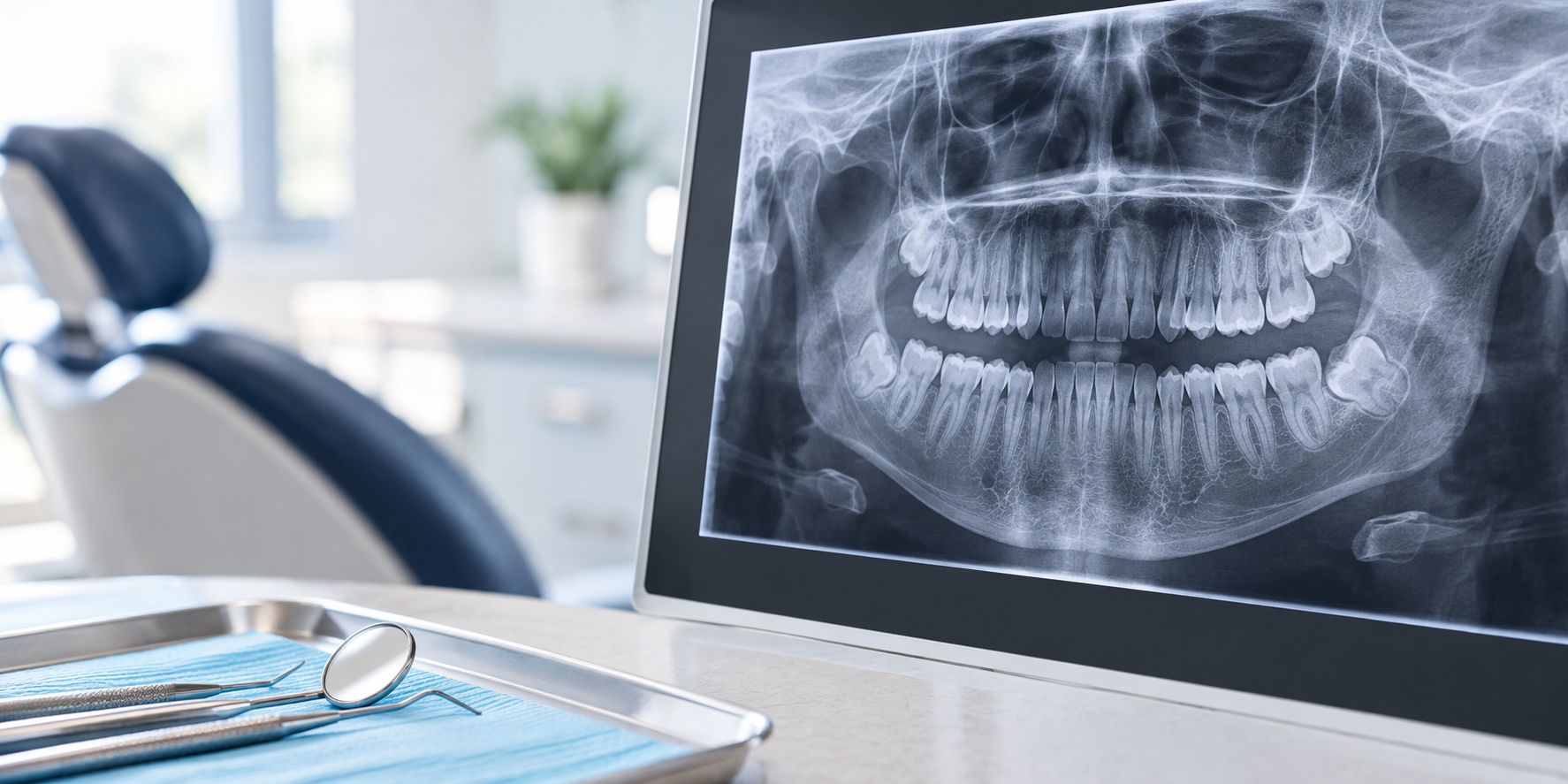
You can’t evaluate wisdom teeth by looking in the mirror. Most of what matters is happening inside the jawbone, and dental X-rays are the only tool that gives your dental professional a full picture.
A panoramic X-ray shows all four wisdom teeth at once, their angle, their relationship to the second molars, and how much root development has occurred. Your dentist can usually spot potential problems on an X-ray before you feel any symptoms. That’s why the American Dental Association recommends that dental professionals start monitoring wisdom teeth with imaging around age 16 to 17, even if the patient isn’t experiencing pain.
X-rays also help determine the type of impaction. Soft tissue impaction means the tooth has broken through bone but is still covered by gum tissue. Partial bony impaction means the tooth is stuck partway through the jawbone. Full bony impaction means the tooth is entirely encased in bone. Each type requires a different surgical approach, and knowing the specifics ahead of time helps the oral and maxillofacial surgeon plan the procedure accurately.
Why an Oral Surgeon Should Handle Wisdom Teeth Removal
Your general dentist can monitor wisdom teeth, but the extraction itself is a surgical procedure. That’s especially true for impacted wisdom teeth stuck below the gum line, inside bone, or positioned against a nerve. Oral and maxillofacial surgeons complete years of surgical training beyond dental school specifically for procedures like this. A specialist who performs wisdom tooth extractions every day handles complications differently than a general dentist who fits a few extractions between cleanings and fillings.
At our offices, we do only wisdom teeth removal. Your exam, X-rays, and extraction happen in a single visit. A CRNA (certified registered nurse anesthetist) manages your sedation while the doctor focuses entirely on the extraction. Two separate people, two separate jobs. Payment plans are available even with bad credit, and pricing is all-inclusive so you know the cost before you walk in.
Protecting Your Oral Health and Neighboring Teeth Long-Term
Wisdom teeth affect more than just the back of your mouth. Left unchecked, an impacted or partially erupted tooth creates a chain reaction. Bacteria from an infected gum pocket can travel to neighboring teeth. Pressure from a sideways-growing wisdom tooth can shift your dental alignment. Chronic low-grade infection contributes to gum disease that affects your overall oral health.
If you’ve had orthodontic treatment, protecting that investment means staying on top of your wisdom teeth. The same teeth you spent years straightening can shift if a wisdom tooth pushes against your second molars from behind.
The best approach is simple. Visit your dentist regularly, get your dental X-rays on schedule, and don’t ignore symptoms like a persistent dull ache, tender or bleeding gums, bad breath you can’t explain, or an unpleasant taste at the back of your mouth. Pay attention to these signs.
If you’re in your late teens or early twenties and haven’t had your wisdom teeth evaluated, now is the right time. Your exam, X-rays, and extraction all happen in one visit, and payment plans are available even with bad credit. Find a location near you and call to schedule your appointment today.