UTAH - 801.406.8670



What’s The Easiest Way to Get My Wisdom Teeth Removed?
Who This Is For
Key Takeaways
|
If you’ve been told your wisdom teeth need to come out, you’re probably wondering how to make this as fast and painless as possible. The short answer is to find a specialist, get it done in one visit, and choose the right sedation. That’s the whole framework. Everything else below is the detail behind it.
Most of the complexity people associate with wisdom teeth removal comes from the traditional path: dentist consultation, referral to a surgeon, separate appointment, and separate billing. It doesn’t have to work that way.
What Makes Wisdom Teeth Removal Easy or Hard
The difficulty of this procedure has less to do with your specific teeth and more to do with how you approach it.
A fully erupted wisdom tooth is one of the third molars at the back of your mouth, and it may not need to be removed if there is enough room and enough space for it to come in properly. You might wonder how many wisdom teeth you have. Typically, there are four, one in each corner of your mouth. Impacted wisdom teeth are teeth that do not fully emerge from the gums, sometimes because they’re angled or trapped in the mouth, and they can press on nearby teeth and lead to pain or infection. Most people fall somewhere in between. The important thing to know is that both scenarios are routine for a specialist, and neither one should require you to make three separate appointments before anything actually happens.
Keeping impacted wisdom teeth can contribute to bite misalignment, headaches, damage to adjacent teeth, or bacterial infections. They can also increase the risk of oral health issues such as gum disease and periodontal disease. These problems can lead to tooth decay in nearby teeth if left untreated.
The factors that most affect your experience are who removes the teeth, whether you can handle the exam and extraction in one visit, and what sedation you choose.
Go Straight to an Oral Surgeon or Specialist
This is the biggest single variable in how smooth your experience is.
A general dentist handles fillings, cleanings, crowns, root canals, and a dozen other procedures. Wisdom teeth removal is one item on a long list. A specialist whose entire practice is built around this single procedure brings deep oral surgery expertise, and more complex cases are often handled by oral and maxillofacial surgeons or maxillofacial surgeons. That volume shows in the technique, the speed, and the ability to handle complications without referring you somewhere else mid-process.
At Wisdom Teeth Guys, wisdom teeth removal is all we do. Every patient who comes through the door gets the full focus of a team that specializes in exactly this procedure, not a generalist fitting extractions in between other appointments. That specialization is the reason we can handle impacted cases in-office when an oral surgeon is not needed, while the most difficult cases may require maxillofacial surgery.
If you’re calling around to compare providers, ask directly whether they can remove impacted teeth in-house. If the answer is no, you may be looking at a second referral down the road.
Extraction uses specialized tools and anesthesia and should only be done by a licensed dentist or oral surgeon, consistent with guidance from the AAOMS and the Oral Health Foundation.
Get the Exam, X-rays, and Removal in One Appointment
The easiest version of this process looks like this: you come in once, they examine your teeth and take X-rays on the spot, review your treatment options based on the imaging, and remove the teeth the same day. One appointment. Done.
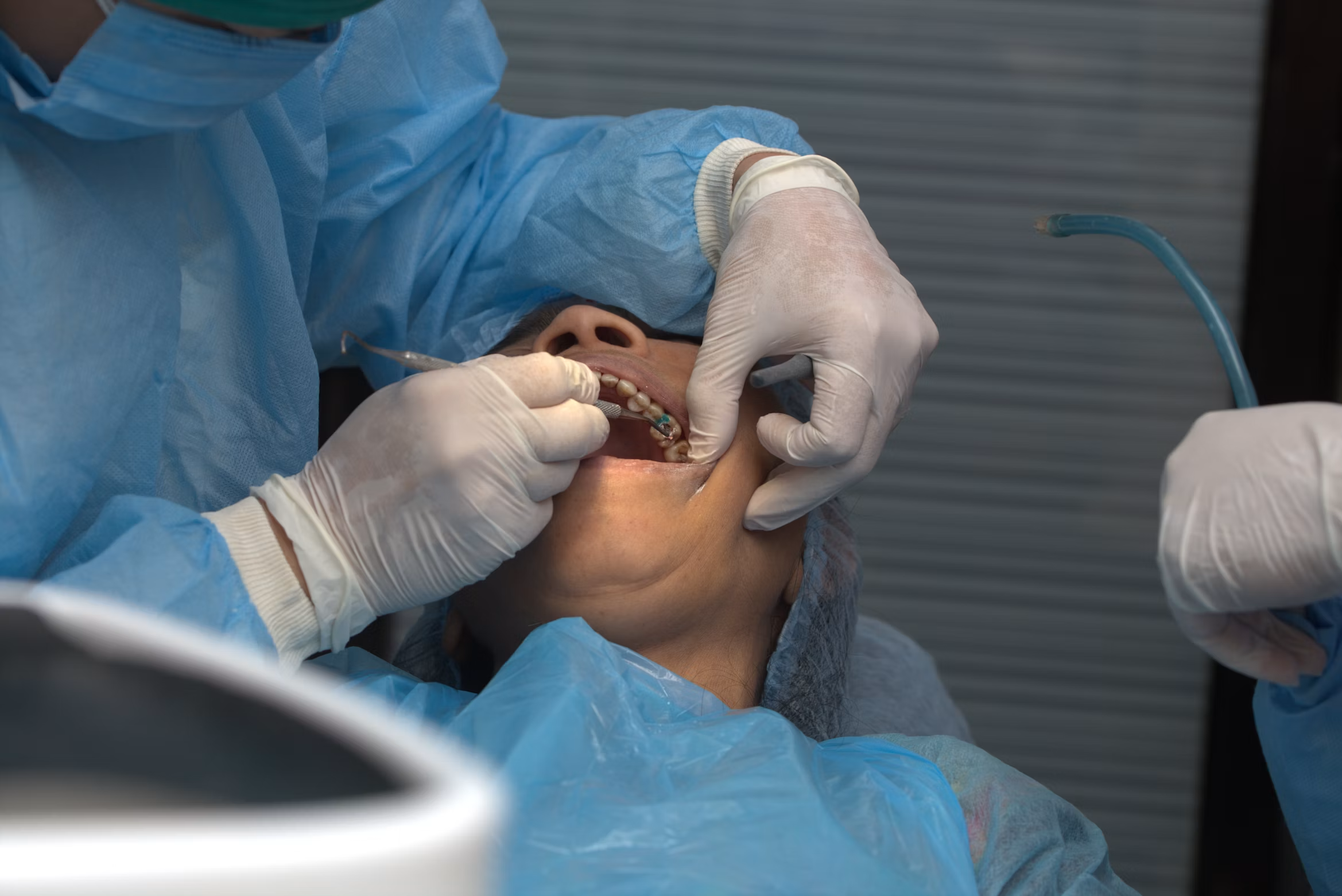
That’s exactly how we operate. No referral needed to get started. You don’t have to coordinate between your regular dentist, a separate radiologist, and a surgeon. You come in, and we assess what we’re working with: a simple wisdom tooth extraction is used when a tooth is fully visible above the gumline, while wisdom tooth removal becomes a more complicated procedure when the tooth is impacted or only partly erupted. We take care of it in one visit. That process may include numbing the area, opening the gum tissue if needed, and using specialized instruments to remove impacted wisdom teeth.
When you’re researching providers, ask specifically whether same-day removal is available. Some practices require a separate consultation visit before scheduling the extraction. That model works fine, but it means two days off work or school instead of one.
Choose the Right Sedation for Comfort and Ease
The fear is almost always worse than the procedure itself. The area is completely numb with a local anesthetic before anything starts. You’ll feel pressure, not pain. Once you’re numb, the tooth is coming out regardless of whether you’re awake or sedated.
For patients who want to be more relaxed or have no memory of the procedure at all, IV sedation is the standard option. It’s a form of sedation anesthesia used to make wisdom teeth removal more comfortable, especially for anxious patients. You’ll be comfortable throughout, and most patients don’t remember anything from the time the sedation starts to the time they’re in recovery. If you’re anxious, this is the path that makes the experience genuinely easy.
Laughing gas (nitrous oxide) is another sedation option for patients who want to stay awake but feel relaxed. It helps reduce anxiety and discomfort during the procedure without the deeper sedation effects.
General anesthesia is typically reserved for highly complex impactions or severe anxiety, unlike sedation, where patients usually keep breathing on their own.
One thing that sets our practice apart is how we handle anesthesia. A CRNA, a certified registered nurse anesthetist, manages your sedation separately from the surgeon removing your teeth. That means one professional whose only job is your comfort and safety, and one surgeon whose only job is the extraction. When those roles are split, both are done better.
Local anesthesia alone is also available for straightforward cases. You’ll be awake, the procedure is typically under an hour, and recovery is a little faster because there’s no sedation to clear from your system.
When to Get It Done for Best Results
Younger is easier. In your late teens or early 20s, the roots of the wisdom teeth are still developing, and the surrounding bone is more flexible. Extractions at this stage are faster and heal faster. Many dental specialists recommend removing asymptomatic wisdom teeth at this stage to protect oral health and avoid future complications, as the procedure is generally safer and better tolerated. Waiting longer can increase the chance of a more complicated procedure and a longer recovery.
Pain is a lagging indicator. By the time a wisdom tooth is actively hurting, it may have already been pushing against neighboring teeth, creating bacterial pockets, or developing an infection below the gum line. The X-ray tells the real story. If a dentist has flagged your wisdom teeth as a problem, that’s the signal to act, not the presence or absence of severe pain.
Adults get this done all the time, and the process is the same. If you’ve been putting it off for years, sooner is genuinely better than later.
What Recovery Looks Like and How to Care for Yourself
Wisdom teeth removal recovery is usually manageable, but full healing often takes one to two weeks, even though many people get back to normal activities within three to five days. The first day is often the most uncomfortable, and pain and swelling usually peak on the third or fourth day before gradually improving.
Many patients do best with ibuprofen plus acetaminophen because the combination works better than either medicine alone. Rest for a few days after surgery to help facilitate recovery. Applying ice packs to the face in intervals can help reduce swelling after wisdom tooth surgery.
Patients with rough recoveries are usually the ones who pushed too hard too early, instead of resting, using ice packs regularly, and following a soft-food diet for the first three to five days. Soft foods like scrambled eggs, yogurt, and mashed potatoes are ideal. Avoid spicy foods, hard foods, and carbonated beverages during recovery. Also, avoid drinking alcohol or smoking, as these can interfere with healing.
Rinse gently with warm salt water starting 24 hours after surgery to keep the surgical site clean and reduce the risk of infection. Avoid vigorous rinsing to prevent dislodging the blood clot.
Dry socket is the most common complication worth knowing about. It happens when the blood clot that forms over the extraction site gets dislodged before the socket heals. Suction from drinking through a straw or smoking can dislodge the healing blood clot after wisdom tooth extraction and increase complications, which is why those early recovery steps matter for preventing dry socket. It’s a painful condition, but your dentist can treat it if it occurs.
Your oral surgeon may use dissolvable stitches, which do not require removal. If non-dissolvable stitches are used, you’ll be instructed on when to have them removed.
Paying for The Procedure and Insurance Coverage
Cost is the most common reason people delay. Payment plans are available even with bad credit. For patients with insurance, financing is available to cover deductibles and copays as well.
The average cost of wisdom teeth removal in the United States ranges from $1,200 to $4,175, depending on the complexity of the procedure and geographic location. Uncomplicated surgical extractions average around $363 per tooth, with sedation costs averaging $349 total. On average, basic wisdom teeth removal costs about $2,685 for all four teeth, but can vary widely.
Delaying removal when a dentist has already flagged a problem rarely saves money. Impactions that cause infection, damage to neighboring teeth, or fluid-filled sac (cyst) formation cost significantly more to treat than a timely extraction. The math on waiting usually doesn’t work in your favor.
Ready to Get Your Wisdom Teeth Removed?
Find the location of the Wisdom Teeth Guys closest to you and book your appointment. No referral needed. Exam, x-rays, and removal in one visit, for patients in Texas, Arizona, and Utah who want this handled the right way.
Remember, taking care of your oral health foundation now helps prevent tooth decay, gum disease, and other oral health issues later. Don’t wait for severe pain or complications to act. Early removal is often the easiest way to get your wisdom teeth removed and maintain a healthy smile. Most cases do not result in long-term complications when treatment is handled appropriately.