UTAH - 801.406.8670


Do I Need My Wisdom Teeth Removed? Signs, Risks, and What to Expect
Quick SummaryWisdom teeth are the last molars to come in, usually between ages 17 and 21. They are removed when they cause pain, crowding, infection, or cannot fully emerge from the gumline. Not all wisdom teeth need to be removed, but when problems appear, removal is one of the most common and straightforward dental procedures. Key Takeaways
Who It’s For
|
Many people wonder whether they need their wisdom teeth removed. Some have them out at 18 without a problem, and others keep them into adulthood with no issues. The answer depends on how your wisdom teeth grow in, how they are positioned, and whether you can keep them clean.
This guide covers why wisdom teeth cause problems, the signs that point to removal, what the procedure involves, and how to decide between removing and monitoring them.
Why Wisdom Teeth Cause Problems
Wisdom teeth, also called third molars, sit at the very back of the mouth. Most people develop four, one in each corner of the upper and lower jaw. Some have fewer, and a small number never develop any.
The teeth are rarely the issue on their own. The issue is room. Many jaws do not have enough room for a full set of molars, so when wisdom teeth erupt, they often grow in at various angles. They can come in crooked, press against neighboring teeth, emerge only partway, or stay trapped beneath the gumline or bone.
Each of these situations can lead to pain, infection, and long-term damage to oral health if left alone.
Common Reasons Wisdom Teeth Are Removed
Dentists rarely cite a single cause. The recommendation usually comes from one or more of the following.
Impacted Wisdom Teeth
An impacted tooth cannot fully break through the gums. Another tooth may block it, or it may sit at the wrong angle. Impacted wisdom teeth can damage neighboring molars, crowd other teeth, and cause infections. Partial impaction carries added risk because it creates a flap of gum tissue that traps bacteria and is hard to clean.
Crowding
As wisdom teeth erupt, they can push against adjacent teeth. This matters most for people who have had braces, since shifting can undo years of alignment. Dentists differ on how much wisdom teeth contribute to crowding, but many recommend removal as a precaution.
Infection and Gum Disease
Partially erupted wisdom teeth are hard to brush and floss around. Bacteria collect under the gum tissue and can lead to pericoronitis, an infection that causes swelling, pain, and sometimes difficulty opening the mouth. Partially erupted teeth can also lead to gum disease and ulcers.
Tooth Decay
Because of their position, wisdom teeth are hard to keep clean, and even fully erupted ones can develop cavities. Wisdom teeth can cause cavities and gum disease if they are not removed. Extraction may be recommended for recurrent infections or significant tooth decay, since repeated treatment of a hard-to-reach tooth is rarely practical.
Cysts and Damage to Nearby Teeth
A fluid-filled sac, called a cyst, can form around an impacted wisdom tooth. Cysts near wisdom teeth can damage surrounding bone and teeth and may require removal. The roots can also press on the second molars in front of them and weaken them.
Signs You May Need Your Wisdom Teeth Removed
Wisdom teeth often cause problems before you can see them. Common signs include:
- Pain or discomfort in the back of the jaw
- Red, swollen, or bleeding gums around the back molars
- Tender gums that stay sore after brushing
- Swelling and difficulty opening the mouth
- Jaw pain or stiffness
- Constant headaches
- A bad taste or odor from the back of the mouth
- Visible damage or shifting of the teeth in front
Pain in the back of the mouth may point to wisdom teeth, but some impacted teeth cause no symptoms at all. That is why regular dental exams and X-rays are essential for catching problems early. The American Dental Association and the American Association of Oral and Maxillofacial Surgeons both encourage routine exams so a dentist can track how your wisdom teeth develop.
Upper Jaw and Lower Jaw Considerations
Position changes the risk. Upper wisdom teeth sit close to the sinus cavity, and in some patients their roots sit near it, which can contribute to sinus issues during or after treatment. Lower wisdom teeth sit near the inferior alveolar nerve, which affects how complex surgery will be. Your dentist or oral surgeon will review the nearby nerves and sinus on your X-rays before making a recommendation.
What the Removal Process Involves
Most extractions are outpatient procedures performed by a dentist or oral surgeon. Oral and maxillofacial surgeons complete extra surgical training, which helps for impacted or complex cases.
Consultation and X-Rays
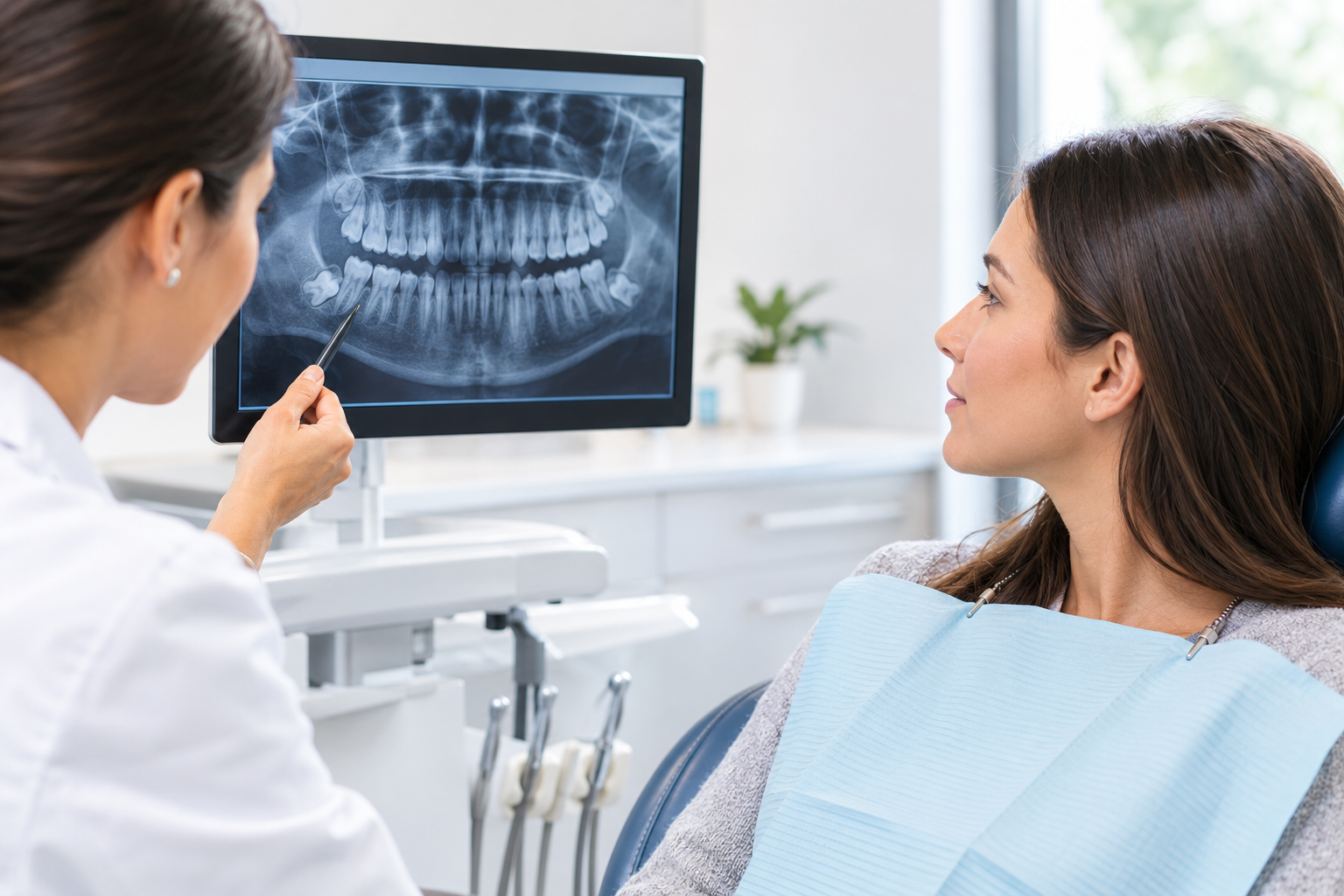
Your dentist will take X-rays or a 3D scan to see tooth position, root development, and how close each tooth is to nerves and other teeth. This shows how complex the extraction will be and whether you should see a specialist for an expert opinion. It also forms the basis of your treatment plan.
Anesthesia Options
Most extractions use local anesthesia to numb the area. For complex cases, or for patients with anxiety, options include nitrous oxide, oral sedation, and IV sedation. Your provider will recommend the safest choice for your situation.
The Extraction
A fully erupted tooth comes out much like any other. An impacted tooth may need a small incision in the gum, and the tooth is sometimes divided into sections to make removal easier. Surgeons often close the site with dissolvable stitches, so you do not need a second visit to remove them. The procedure typically takes 30 to 60 minutes, depending on how many teeth are removed, whether they are fully formed, and how complex each one is.
What Does Wisdom Teeth Removal Cost?
Simple extractions of fully erupted wisdom teeth typically run $75 to $200 per tooth. Surgical removal of impacted teeth usually costs $225 to $600 per tooth. Complexity, location, and the type of anesthesia all affect the total. Removing all teeth in one visit is often the more affordable route.
Most dental insurance plans cover at least part of the cost, especially when there is a documented medical reason. Coverage may fall under surgical benefits and count toward your annual deductible, so confirm with your insurer and provider before scheduling. Costs also vary by market, and specialists in urban areas generally charge more than general dentists in smaller towns. Ask for an itemized estimate that lists the surgical fee, anesthesia, and facility costs separately.
Factors That Shape a Dentist’s Recommendation
Most dentists weigh several things before suggesting removal:
- Current symptoms. Pain, swelling, or infection are the clearest indicators.
- Position and angle. How the tooth sits in the jaw affects risk.
- Root development. Younger patients have shorter roots and heal faster.
- Jaw space. Whether there is enough room for the tooth to come in cleanly.
- Proximity to nerves. This affects surgical complexity, especially in the lower jaw.
- Overall oral health. Decay, gum disease, and past orthodontic work all matter.
Remove or Keep Your Wisdom Teeth?
Remove Them Early
Dentists recommend evaluating wisdom teeth during the teen years. Removing them in your late teens or early twenties, before the roots are fully formed, usually means a shorter recovery and a less complex procedure. Removing wisdom teeth is easier before age 20, and many dentists suggest it even without symptoms when X-rays show likely problems. Preventing a problem is simpler than fixing one.
Wait and Monitor
If your wisdom teeth are fully erupted, positioned correctly, and easy to clean, they can often stay. In that case, most dentists take a watch-and-wait approach with periodic X-rays. This is a sound plan for healthy, well-positioned teeth.
Remove Them Only When Symptoms Appear
Some patients wait until pain, infection, or damage appears. By then, the procedure may be more complex, and older patients may face a longer recovery.
What Recovery Looks Like
Most people return to normal activity within a few days, while the gum tissue takes a few weeks to heal fully.
First 24 Hours
- Expect some swelling and bleeding.
- Bite on gauze to help a blood clot form in the tooth socket.
- Avoid forceful rinsing, spitting, and straws, which can dislodge the clot.
Days 2 Through 7
- Swelling typically peaks at 48 to 72 hours, then improves.
- Eat soft food such as yogurt, scrambled eggs, mashed potatoes, and soup.
- Rinse gently with warm salt water after meals, starting on day two.
- Over-the-counter pain relievers are enough for most patients.
Watch for Dry Socket
Dry socket happens when the blood clot dissolves or is dislodged too early and leaves bone exposed. It is the most common complication and causes noticeable pain two to four days after surgery. Contact your dentist promptly. It is easily treated.
Think Your Wisdom Teeth Might Be an Issue?
A consultation is the simplest way to find out. X-rays show what is happening, and you can decide on next steps without pressure. Wisdom Teeth Guys focuses on wisdom teeth evaluations and extractions, with conveniently located offices and a process built to keep things straightforward. If you have been putting off an evaluation, contact us today to schedule one.
Frequently Asked Questions About Wisdom Teeth Removal
Do I need my wisdom teeth removed?
Not always. If they come in fully, align properly, and stay clean, many dentists leave them alone and monitor them with periodic X-rays.
At what age should I have my wisdom teeth removed?
Most dentists recommend an evaluation between ages 17 and 25. Removal is generally easier in this window because the roots are still developing. Wisdom teeth can be removed at any age if they cause problems.
How long does recovery take?
Most people feel back to normal in three to five days. Significant discomfort usually resolves within the first week, and the gums heal fully over a few weeks.
Is wisdom teeth removal painful?
Anesthesia keeps you comfortable during the procedure. Soreness afterward is manageable with over-the-counter pain relievers, and your provider can prescribe stronger medication if needed.
What happens if I leave problem wisdom teeth in place?
Recurring infections, cysts, damage to nearby teeth, and worsening crowding are common. These problems rarely resolve on their own and tend to progress.
Can I eat normally after wisdom teeth removal?
Stick to soft foods for the first few days, such as yogurt, soup, mashed potatoes, and smoothies without a straw. Most people return to a normal diet within a week, but avoid hard or crunchy food until you have healed.